
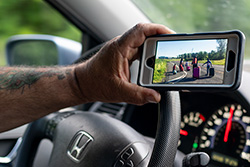
Irregular Crossings: A Conversation with Ruth Kaplan
Ruth Kaplan initially studied photography and painting at Concordia University, transferring after two years to the Photography Studies program at Toronto Metropolitan University where she completed her undergraduate degree and later returned to earn an MFA in Documentary Media. Known for her editorial portraiture and extended documentary projects, she has taught at TMU, OCAD, NSCAD, UTSC and Sheridan universities, led workshops at Gallery 44 and Harbourfront in Toronto, received multiple grants from the Ontario Arts Council, Toronto Arts Council and Canada Council, and has exhibited her work in Canada and internationally for more than four decades. Between 1991 and 2002 she made the photographs for her first book, Bathers, published by Damiani. Some Kind of Divine, which included both photography and video, occupied her between 2001 and 2010, and became the cornerstone of her work in the Documentary Media Program.
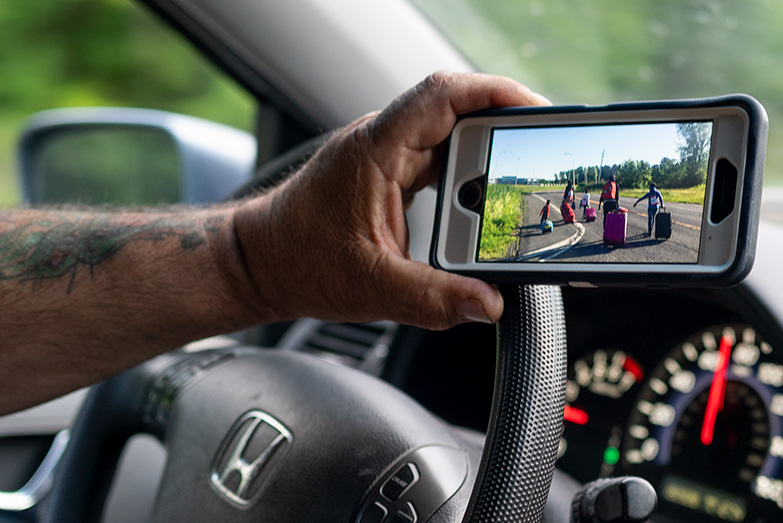
Since 2010, she has been working on an extended visual investigation of human displacement and the problems of statelessness. This has led to a set of thematically related photography and video projects: Migrations, comprised of the slide show If Your Name Appears, made in refugee shelters in Buffalo and Fort Erie; Freedom House, a series of short films made in Detroit; and Status Pending, photographed and filmed in Montreal, Toronto and Detroit. Her newest book, Crossing, has just been published in Europe by Kehrer Verlag, and will be released in Canada later this spring. Articles about the new book have recently appeared in both Photo Ed and Ciel Variable, with an upcoming article in Maclean’s, and the North American book launch will take place at the Stephen Bulger Gallery in May.
Highly respected for the directness and engagement of her work and the broad scope of her projects, Kaplan has always been careful not to sensationalize either her subjects or the issues they face. In a media environment which prizes spectacle and conflict, she concentrates instead on individuals, and the details and rhythms of their everyday experiences: Crossing presents the reader with the often mundane but never simple realities of the situation at Roxham Road as they played out during the years this irregular border crossing was open and in active use. We had a chance to talk shortly after she returned from Germany to supervise the book production, and parts of our conversation are included here.
How did you first get interested in photography?
My dad was an artist. He made a living as a textile designer, but always kept his own work going. What I learned from him was the discipline of doing something every day because you love it. It was just very natural for him to draw or paint, and the reasons he was doing it were really striking to me, because ego wasn’t the driving force.
I was always interested in the arts but never thought I would work in that world professionally. At the beginning I thought, I’ll just do, you know, some peripheral jobs but I found that photography gave me a voice. I was usually so quiet. I didn’t speak much when I was a kid at school, or outside the home really, with a lot of strong personalities in the family. So this was a way of carving out something for myself.
Later on, it becomes a challenge—learning the language of whatever it is you’re choosing to do.
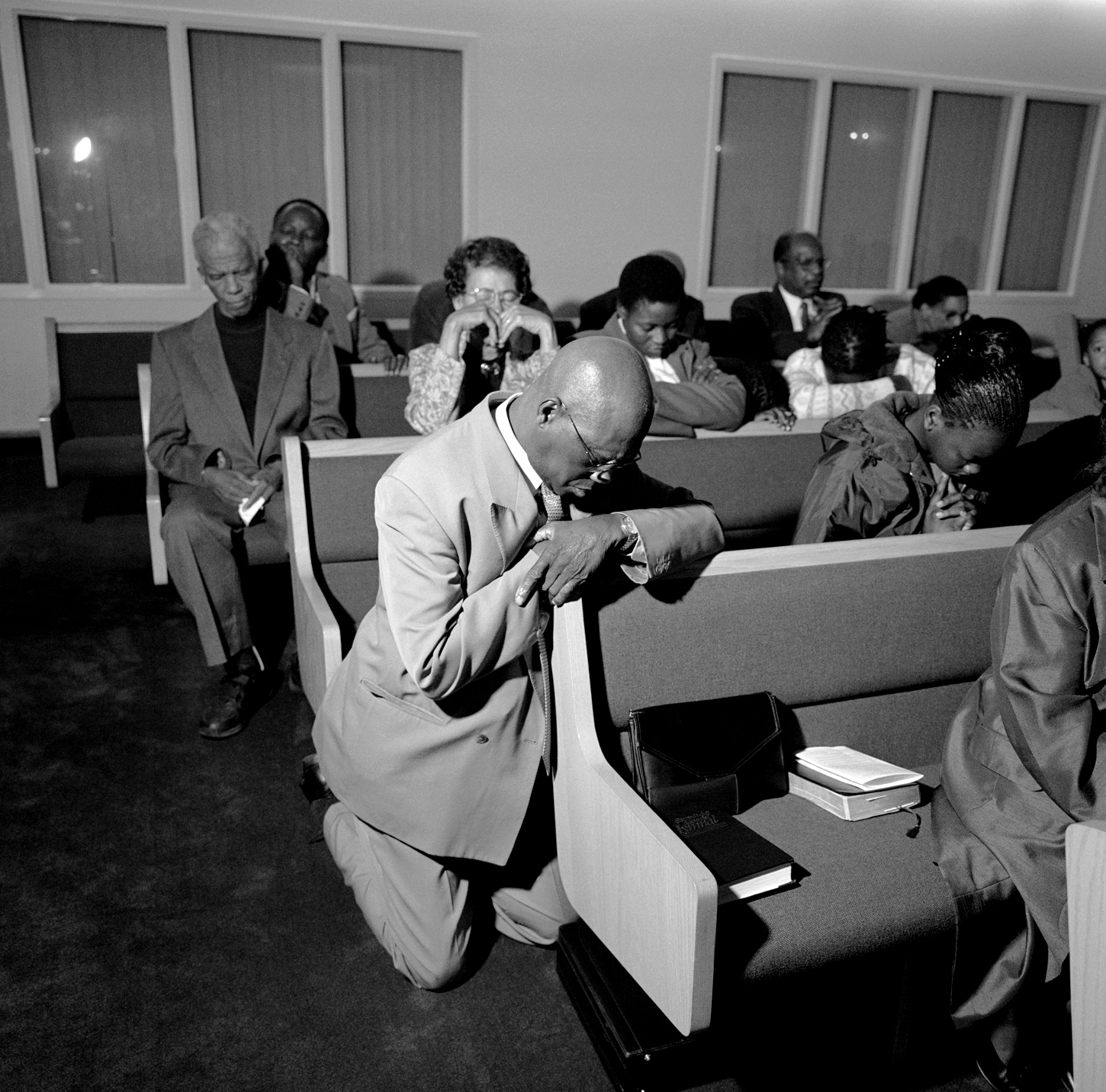
From Some Kind of Divine, 2001
I came out of the tradition of humanist documentary photography but am not trying to work in a strictly traditional way. I relate to the humanism rather than advocacy. When I taught at NSCAD, there was a course called The Situated Portrait. I loved that title as a way to think about portraiture, or photography in general. It brings attention to the situation itself… it could be absolutely nothing, it could be a completely blank situation, and the person fills it, or you project onto it, or it could be very literal.
Doing this new work about Roxham Road and working digitally in color was a big shift from projects like The Bathers or Some Kind of Divine. After many years of analog black and white, I switched tools—needing to photograph at night with very little available light using 10,000 ISO, and appreciating the resolution of the new small cameras, this transition was the obvious choice.
The work I like most is not strictly documentary. For example, Rosalind Fox Solomon, I love the mystery she was able to tap into, and that weird tension, you can’t really explain the images. I find it very hard to get to that, to some kind of mysterious revelation which is deeply engaging while remaining unresolved.
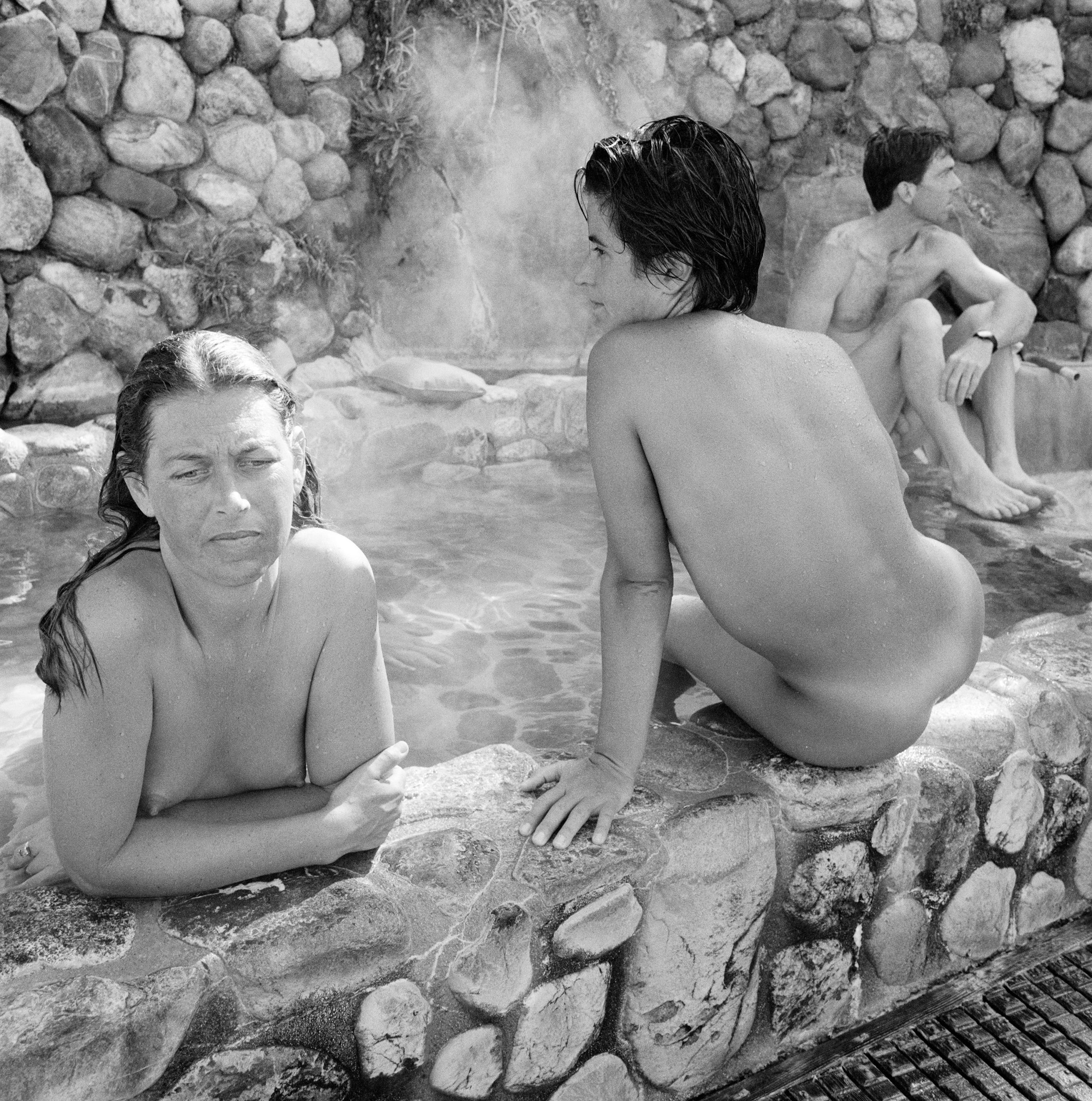
From Bathers, 1992
Roxham Road is a different kind of project, because it’s very tied to the story of the place, as well as the idea of in-between spaces. Every project requires that I work a little bit differently.
From The Bathers, I learned to just let the situation make a place for me, let outside energies and elements make some space for me to participate. I wouldn’t just come in and impose my presence with the camera, it’s more like allowing whatever’s going to accept your curiosity.
I tend to work intuitively and don’t have a preconceived idea of what I’m trying to do that day. I just know where I’m going to go. The location may dictate what will occur to some degree… but overthinking it can block out a lot of possibilities. You need to leave room for chance and life to enter the frame. Your job is to sense it, and to keep it organized so that all the elements function together.
Where did the idea for the new book come from?
The book is more traditional as a documentary project because it’s primarily subject-driven. There is a commitment to the site and what occurred there that I didn’t feel I could tamper with. A lot of interesting work is being made conceptually about borders, for example what Richard Mosse is doing, but it often gets so wrapped up with technology or scale… which is a part of what’s going on in the world, but I wanted to pay attention to the actual people and what’s going on with them. An individual making that journey was interesting to me, especially as refugees are so often portrayed in terms of huge statistics. I didn’t want to work on an epic scale, but rather to pare it down.
After the MFA program, I started working on a project about Canadian and American border town refugee shelters and was working with the NFB at that time; they had asked me to propose ideas for a slide show, and this got me started. A lot of time was spent getting permissions and then I was able to explore daily life at these shelters. Nothing much happened in the course of a day, and for residents, especially in the American shelters, it really wasn’t safe to go walking around.
Residents had to sign out if they were going to do that. They didn’t have proper documents or anything, so most people spent the entire day in the house. The kids were in school, but I wondered, how do people get through their day? And they had no end-date of when their hearing would be set up; it could be a month, it could be three months and even longer. So that’s what I was trying to photograph. It was challenging, because it’s kind of photographing banality, and the dreaminess of getting lost in this suspended transience.
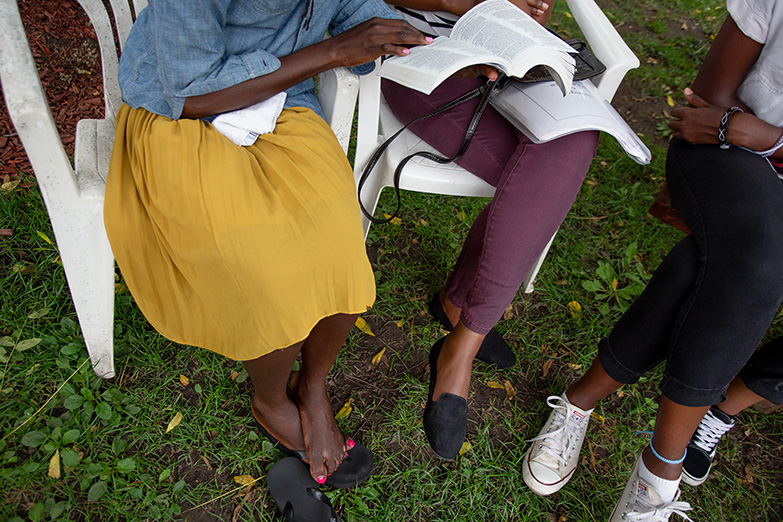
Adam House, 2018, from Status Pending
At first, it was all new… just being there was enough in terms of what I was learning, but eventually it became limited. I felt the project needed some drama to tie it together, and that’s what led me to Roxham Road. I heard about it on the news, like everybody, and thought, I’ll go once, to see what it’s like. And then, of course, it was so interesting—a tiny little spot, a meditative space in the middle of nowhere, and most of the time there is nothing going on, and you’re sitting in nature. And then in the space of five minutes, a lot of stuff happens. I began to go to Plattsburgh and stay for a week each season.
I began photographing at the Plattsburgh bus station, where the cab drivers were. It was somewhat unregulated at the beginning: people came out of the woodwork to drive cabs, cab drivers had disputes with each other over fares… it was like walking into a Shakespearean drama. And the people who were trying to cross were often uncertain and disoriented, but they knew with the new administration they would never be able to stay in the US. So that’s where it started… The first time I went was Christmastime in 2018.
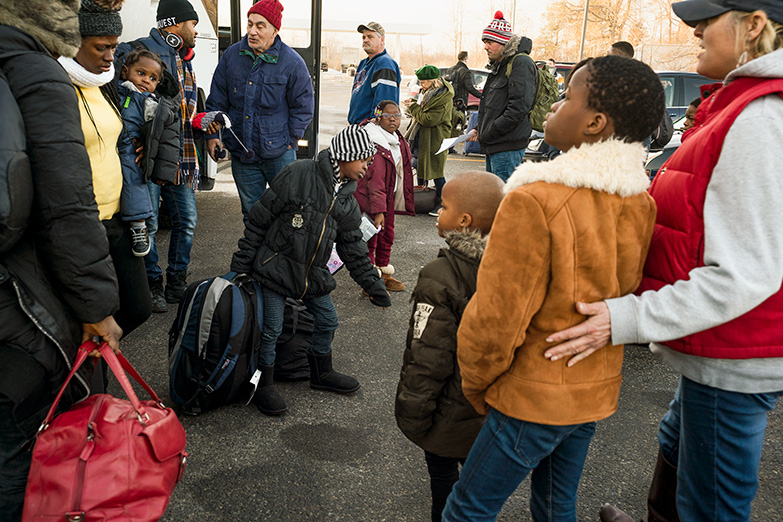
From Crossing, 2021
I kept going back. There was a period during Covid when I stayed away and worked on editing the photos, but then the trips resumed up until the crossing closed in March 2023, at which point I realized it would make sense to do a book.
The Roxham Road crossing was a very unusual place, a microcosm of the way things play out in the world regarding migration, but it was generally safe and effective. People didn’t get hurt there, kids were OK… in general, people seemed to be treated well once they crossed, and the infrastructure in Quebec at the time was pretty good. So it seemed to be working, as opposed to all the controversy and misinformation. Even though you have no idea what happens to any of the people who appear in the book after—or what happened before, really—in that liminal space and time, the frame for the story is set.
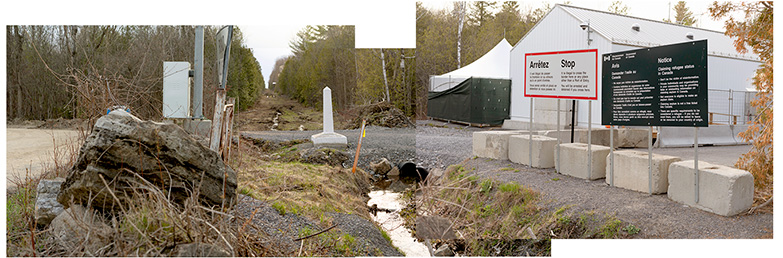
From Crossing, 2019
There are some things I added in the book, for example a narrative about walking into Canada in the dead of winter, written by a journalist from Afghanistan now living in Ottawa; some maps, an explanation of the legal aspects of the Safe Third Country Agreement, bits of interviews I had with people who had crossed at Roxham about their memories of the place.
Unless I had a chance to ride in a taxi with them from Plattsburgh and spend that half-hour, asylum-seekers would only be at the border for a few minutes, usually very focused on crossing, so the last thing they were thinking or caring about was someone hanging around with a camera. We developed a way of communicating, but it was quick, and non-verbal—they would let you know very clearly if they didn’t want to be photographed.
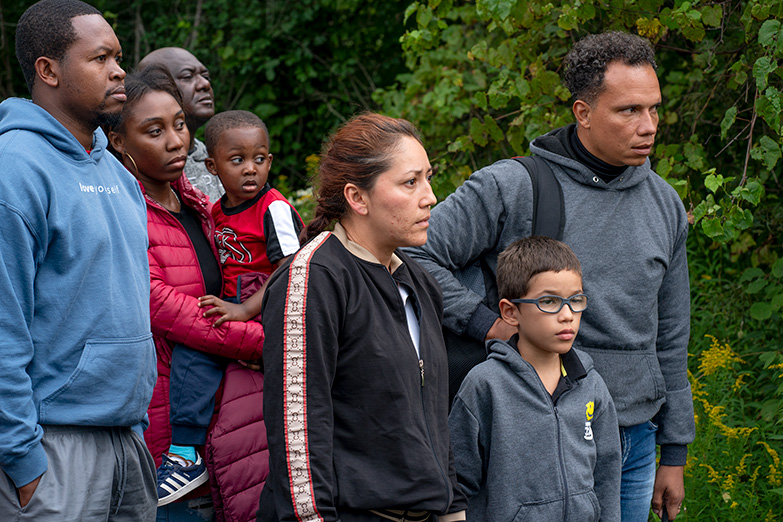
From Crossing, 2022
Sometimes I could help a little bit, especially with French, but there was a protocol about ways of behaving… you couldn’t be seen as actively helping, because you would be abetting an illegal act. That’s why unauthorized drivers didn’t drive up to the border, but dropped people off down the road, and they walked from there.
I found that I couldn’t do the project without including faces. It seemed like too much of an erasure in a situation where people are already erased, and the viewers who would look at the photographs later would not relate to what they were seeing. People often dressed their best for the border crossing, to make a good impression… It was very moving to see that.
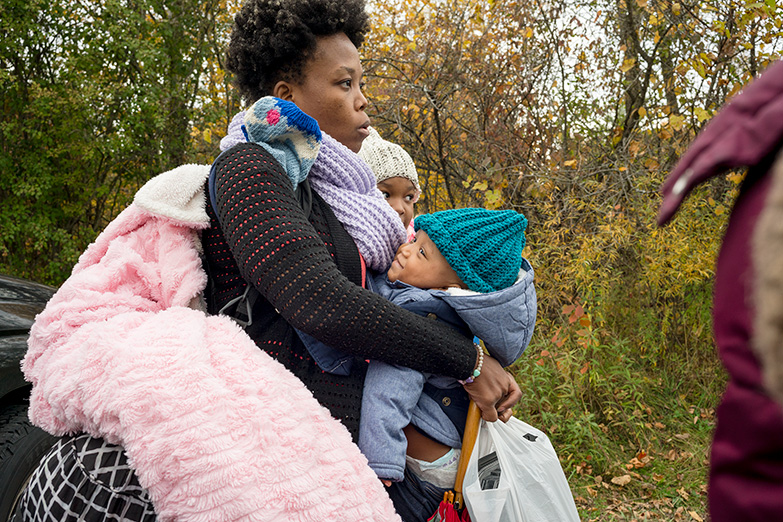
From Crossing, 2019
I loved the ordinariness of most of it, as well as the range… people from all walks of life, people who have been on the road for years, people who flew to the US just a few days before.
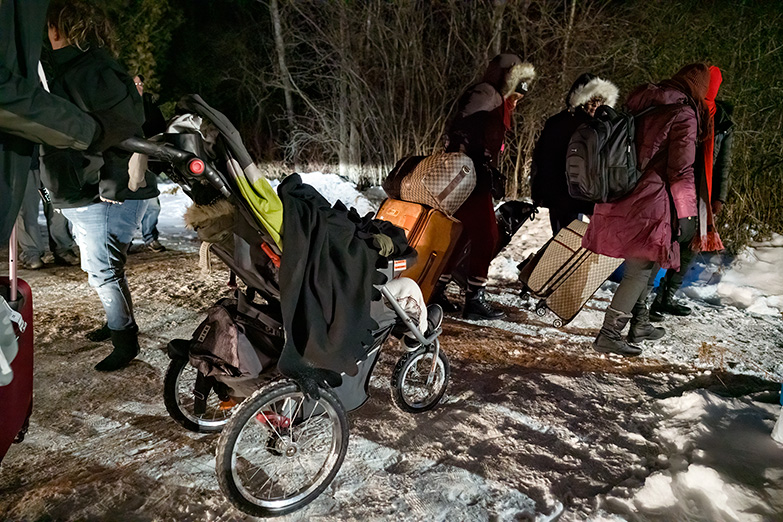
From Crossing, 2019
There was nothing there when I last visited in 2024: the buildings on the Canadian side had been dismantled or removed, with the site becoming more overgrown, an empty space in the middle. But a lot of people crossed there, with all their belongings, their families and their stories.
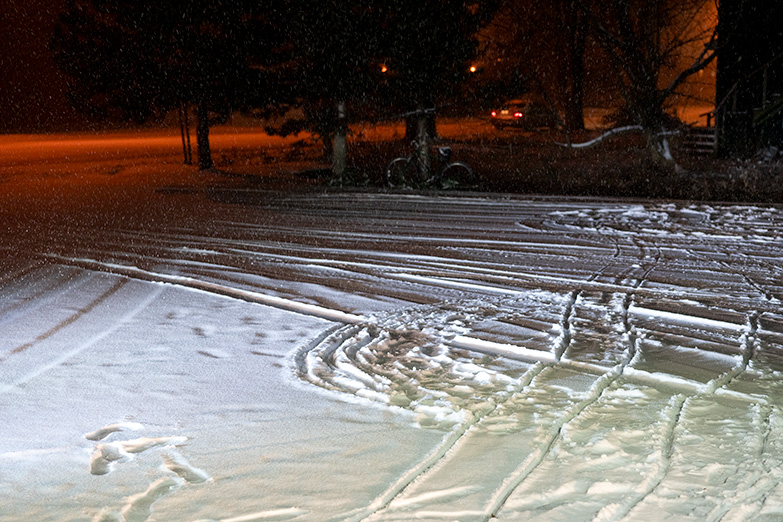
From Crossing, 2021
Ruth Kaplan’s work can be viewed at https://www.ruthkaplanphoto.com
The Crossing is listed by Kehrer Verlag: Ruth Kaplan – Kehrer Verlag
Recent articles on the new book can be found here:
Photo Ed Magazine: The MOVEMENT issue – Community, momentum, motion.
Ciel Variable: Ruth Kaplan, The Crossing – Sophie Mangado – Ciel variable Magazine
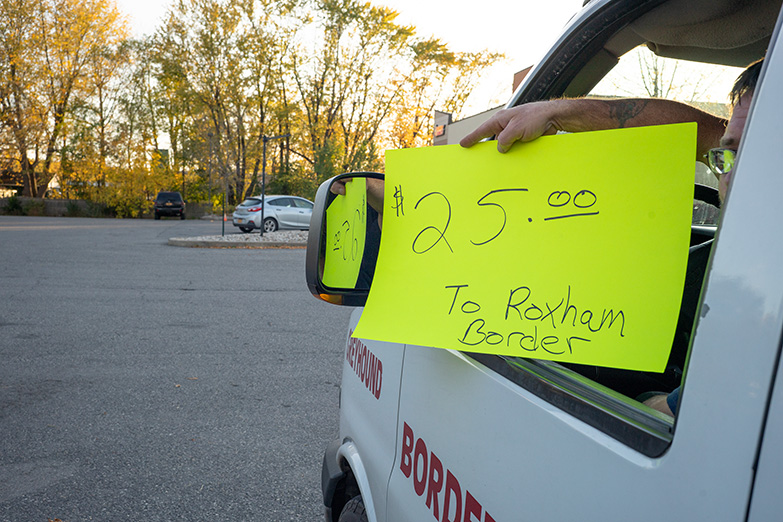
From Crossing, 2019
At the frontier our liberty is stripped away—we hope temporarily—and we enter the universe of control. Even the freest of free societies are unfree at the edge, where things and people go out, and other people and things come in, where only the right people must go in and out. Here, at the edge, we submit to scrutiny, to inspection, to judgment. These people, guarding these lines, must tell us who we are. We must be passive, docile. To be otherwise is to be suspect, and at the frontier to come under suspicion is the worst of all possible crimes….
— Salman Rushdie, from Step Across This Line, 2002
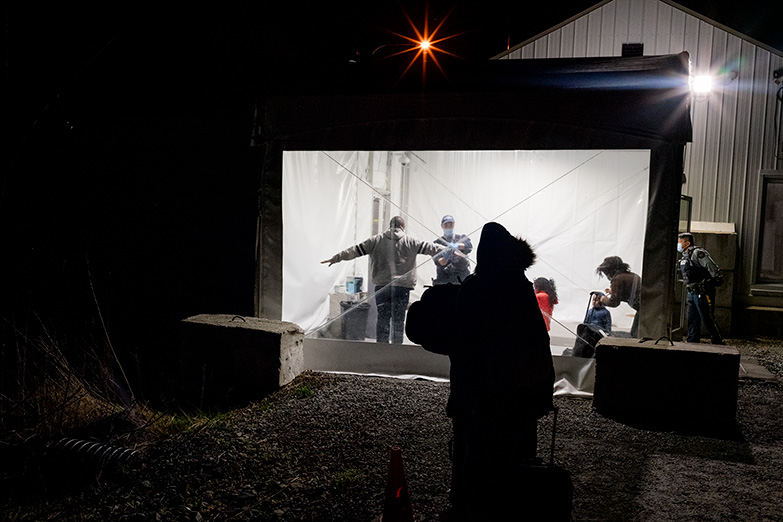
From Crossing, 2021
All photographs copyright 2026 by Ruth Kaplan